War Economy
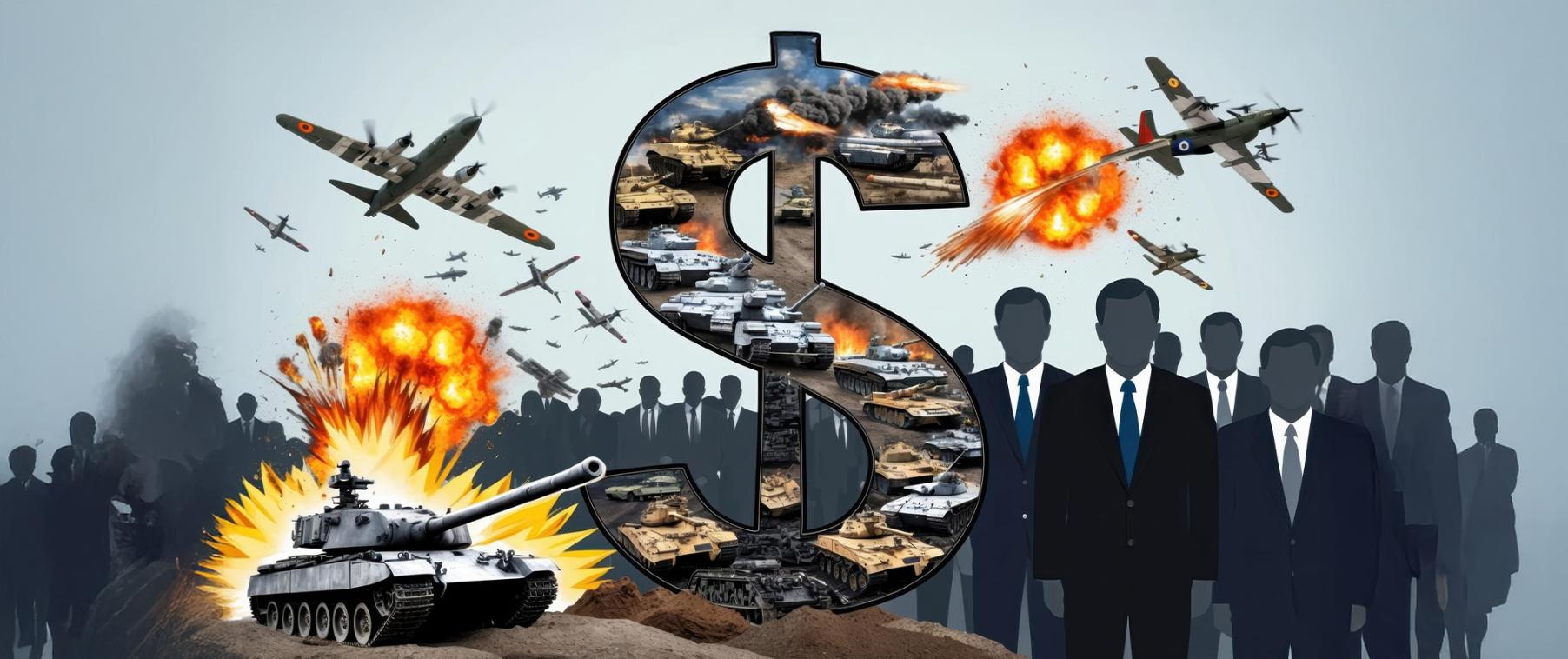
A war economy refers to the restructuring of a country’s economic system to support military objectives during periods of conflict. Governments redirect industrial production, labour, technology, and financial resources toward defense priorities, often replacing market-driven decisions with centralized planning and strategic control.
Historically, wars have transformed economies at remarkable speed. During the Second World War, automobile factories were converted into aircraft production units, and civilian consumption declined as resources shifted toward military needs. Such mobilization not only strengthened national defense but also accelerated industrial capacity and technological development. Many innovations we use today including radar systems, satellite technology, and the early foundations of the internet emerged from wartime research environments.
Modern war economies extend beyond traditional weapons manufacturing. Today’s conflicts involve cyber warfare, artificial intelligence, semiconductor supply chains, and energy security. Governments increasingly invest in digital infrastructure, surveillance systems, and autonomous technologies to maintain strategic advantage. Economic tools such as sanctions, export restrictions, and control over critical minerals have become powerful instruments of geopolitical influence.
War economies also reshape societies. Labour shifts toward defense industries, governments expand regulatory authority, and new employment opportunities emerge in strategic sectors. At the same time, prolonged militarization can increase inequality and place pressure on democratic institutions if emergency measures persist beyond wartime.
In an era of rising geopolitical competition, many nations are strengthening domestic production capabilities and reducing dependence on global supply chains. This shift reflects the growing importance of economic preparedness as a component of national security.
Ultimately, war economies do more than sustain conflicts they reshape technological progress, global trade structures, and the long-term trajectory of national development.
Author: Mr Adarsh Saha
Assistant Professor,
Institute of Management & Research,
MGM University, Chh. Sambhajinagar.