A World of Opportunities: A Promising Career in Food Processing and Technology
Introduction
Food is one of the most essential needs of human life, and ensuring its safety, quality, nutrition, and sustainability has become a global priority. With rapid population growth, changing food habits, urbanization, and rising demand for processed and convenience foods, the role of Food Technology and Food Processing Technology is more important than ever. This multidisciplinary field combines science, engineering, and technology to convert raw agricultural produce into safe, nutritious, and value-added food products. In India, where agriculture and food processing significantly contribute to the economy, food technologists help reduce post-harvest losses, improve shelf life, ensure food safety, and promote sustainable food systems. Today, Food Technology is about innovation, health, sustainability, and tackling global food challenges.
What is Food Processing and Technology?
Food Processing and Technology is a scientific discipline focused on processing, preservation, packaging, quality control, and distribution of foods. It applies chemistry, microbiology, biochemistry, engineering, and nutrition principles to develop safe, high-quality foods. The field includes operations like cleaning, grading, size reduction, thermal and non-thermal processing, fermentation, drying, freezing, packaging, and storage, emphasizing food safety, quality assurance, and regulatory compliance. With strong laboratory exposure and practical training, students learn to ensure that food products meet national and international quality standards.
Why Pursue Food Technology in 2025 and beyond?
Food Technology is a future-focused career due to global population growth, rising demand for ready-to-eat and functional foods, and increased awareness of nutrition and safety. Government initiatives such as Make in India, Startup India, PMFME, and rapid sector growth offer vast opportunities. Emerging areas like plant-based foods, nutraceuticals, sustainable packaging, and food waste valorisation are driving innovation. With export potential and stricter safety regulations, skilled food technologists are highly sought after. MGM University programs designed to equip students with technical competence, regulatory understanding, and industry-oriented skills.
Programs Offered at The Institute of Biosciences & Technology (IBT), MGM University:
- B.Tech. in Food Processing Technology
- B.Sc. (Hons.) Food Technology & Processing
- M.Tech. in Food Technology
- M.Sc. in Food Technology
- Ph.D. in Food Technology
These programs focus on practical learning, research exposure, regulatory understanding, and industry readiness.
Institute Facilities & Academic Strengths
The institute follows a student-centric, practice-oriented academic model aligned with NEP 2020. The curriculum emphasizes a 60% practical and 40% theoretical approach, supported by well-equipped laboratories. Project-based learning, professional projects, and internships provide strong industry exposure, while a credit-based system ensures academic flexibility. Limited student intake, career assistance, and continuous faculty mentoring further enhance student learning outcomes.
Career Opportunities in Food Processing and Technology
Food Technology is a highly versatile discipline that opens career pathways across government, industry, academia, finance, startups, consultancy, and entrepreneurship. The multidisciplinary nature of the field allows graduates to work at different levels of the food value chain from farm to fork.
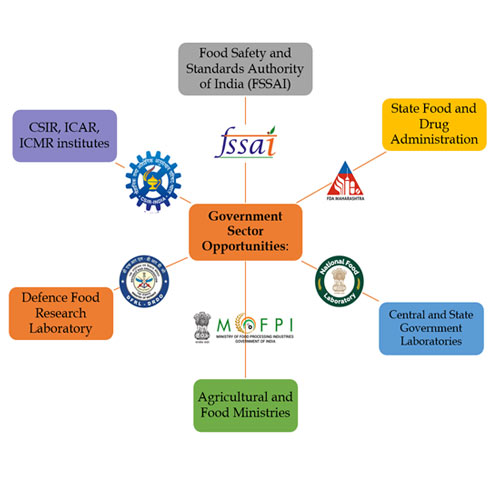
1. Government Sector Opportunities: Food technologists play a crucial role in public health, food safety, and policy implementation. Opportunities exist in:
- Food Safety and Standards Authority of India (FSSAI) – Food Safety Officer, Technical Officer, Assistant Commissioner, Designated Officer.
- State Food and Drug Administration (FDA)
- Central and State Government Laboratories
- Agricultural and Food Ministries
- Defence Food Research Laboratory (DFRL – DRDO)
- CSIR, ICAR, ICMR institutes
2. Food Industry & Corporate Sector: The food processing industry is the largest employer of food technologists.
- Food Production Manager
- Quality Assurance (QA) / Quality Control (QC) Officer
- Food Safety & Compliance Manager
- Product Development Scientist
- Research & Development (R&D) Executive
- Packaging Technologist
- Supply Chain and Operations Manager
- Sensory Analyst
3. Academic & Research Careers: Students inclined toward teaching and research can pursue careers in academics and scientific research as:
- Assistant Professor / Lecturer (after PG/Ph.D.)
- Research Scientist
- Project Fellow / Senior Research Fellow
- Laboratory In-charge
- Curriculum Developer
4. Banking, Finance & Allied Services: Food technologists are increasingly valued in the financial and banking sector, especially in agro-based funding and project appraisal.
- Agri-Business Officer in Banks (NABARD, SBI, Nationalized Banks)
- Food Industry Project Appraisal Officer
- Credit Analyst for MSME food units
- Risk Assessment Officer for food processing loans
5. Startups & Innovation Ecosystem: The rise of food startups has created exciting opportunities for young food technologists. Roles include Product Innovator, Food Technologist, Operations Lead, Quality Head, and Co-founder. Opportunities in:
- Food product innovation startups
- Functional and health foods
- Plant-based and alternative protein companies
- Sustainable packaging startups
- Food tech platforms and cloud kitchens
6. Entrepreneurship in Food Processing: Food Technology strongly supports self-employment and entrepreneurship. Graduates can establish:
- Food processing units (pickles, snacks, dairy, bakery, beverages)
- Value-added agricultural product enterprises
- Ready-to-eat and ready-to-cook food brands
- Functional food and nutraceutical startups
Government schemes like PMFME, Startup India, MSME schemes, and NABARD funding provide financial and technical support to food entrepreneurs.
7. Consultancy & Professional Services: Experienced food technologists can work as consultants in areas. Consultancy offers flexibility, high income potential, and professional independence.
8. International & Global Opportunities: Food technologists also have opportunities in Multinational food companies, Export-oriented food industries, international research projects, Higher education and research abroad. Global demand exists for professionals skilled in food safety, quality systems, and sustainable processing.
Salary Overview
Salary in Food Technology and Food Processing depends on career path, qualifications, and experience. Entry-level roles in industry and quality control offer ₹3–5 lakh per year. Government jobs like Food Safety Officer and Technical Officer provide structured pay with job security. Mid-level professionals in R&D, regulatory affairs, and management earn ₹6–10 lakh annually. Academics, bankers, consultants, and entrepreneurs can earn more through research, advisory work, and business ventures.
Future Scope & Industry Growth
The future scope of Food Technology is strong due to rising demand for safe, nutritious, and value-added foods. Expansion of the food processing industry, stricter food safety regulations, and government initiatives like PMFME and Startup India are creating opportunities in industry, government, startups, banking, consultancy, and academia. Emerging areas such as functional foods, sustainable packaging, and food innovation make this field a stable and future-ready career option.
Who Should Choose This Field?
Food Technology is ideal for students who:
- Have an interest in food science, processing, and innovation
- Want to contribute to food safety and public health
- Enjoy laboratory work, experimentation, and product development
- Aspire to work in industry, research, or start their own food business
- Are interested in sustainability, nutrition, and value addition
FAQs
- Is Food Technology a good career option in India?
Ans: Yes, Food Technology is a growing field with strong industry demand and government support.
- What is the difference between Food Technology and Food Processing Technology?
Ans: Food Technology is broader, covering processing, safety, quality, and innovation, while Food Processing Technology focuses more on processing operations and value addition.
- Can food technologists start their own business?
Ans: Yes, food processing offers excellent entrepreneurship opportunities in value-added products and startups.
- Is higher education necessary in this field?
Ans: Higher studies like M.Tech., M.Sc., or Ph.D. enhance career prospects, especially in R&D and academia.
- What skills are important for food technologists?
Ans: Technical knowledge, quality awareness, problem-solving skills, and understanding of food regulations are essential.
- Ms. Kalyani Thote,
Assistant professor,
Institute of Biosciences and Technology,
MGM University.
Gallery Images